
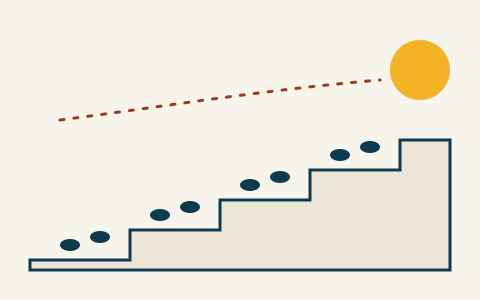
Some is better than none
If you are not active at the moment, the weekly targets in the first guide can feel out of reach. The guidelines were written with that in mind. One of the main messages of the second edition, as HHS summarizes it, is that any amount of physical activity has some health benefits. The CDC puts it in four words on several of its pages: some is better than none.
The second edition also removed an older rule that only counted activity done in bouts of at least 10 minutes. Today, short stretches of moderate or vigorous movement throughout the day all count. A few minutes of brisk walking between other things is a legitimate start, not a failure to do a "proper" workout.
MedlinePlus, the National Library of Medicine's consumer health service, makes the same point from another angle: it is never too late to start, and you can begin slowly and find ways to fit more activity into your life.
When to talk with a doctor first
The CDC says physical activity that needs moderate effort is safe for most people. It then names situations where a conversation with a doctor comes first:
- If you have a chronic health condition, such as heart disease, arthritis or diabetes, talk with your doctor about the types and amounts of activity that are right for you.
- Talk with your doctor before starting vigorous-intensity activity if you have been inactive, have a disability, or have overweight.
MedlinePlus adds that it is worth checking with a health care provider before you start if you have trouble moving or balancing, or if you worry that exercise might not be safe for you. The National Heart, Lung, and Blood Institute advises talking with a healthcare provider before a new exercise plan about how much and what types of activity are safe.
Having a condition is not a reason to stay inactive. The CDC's guidance for adults with chronic conditions or disabilities says that those who are able should aim for the same weekly amounts as other adults, that regular activity brings them important benefits, and that a health care professional or physical activity specialist can help with the right types and amounts. Where a condition makes the full amounts impossible, the advice is to be as active as you are able.
A note on symptoms
This site cannot tell you whether a symptom during activity is serious. If you have symptoms that worry you, get advice from a qualified health professional, and in an emergency call for emergency help.
Shaping the first few weeks
The agencies do not publish a single beginner program, because a sensible start depends on the person. What they do provide is a set of principles that can shape the first few weeks:
- Start with what you can already do. For many people that is walking. Brisk walking is the CDC's standard example of moderate activity, and its benefits page describes moderate activity such as brisk walking as generally safe for most people.
- Use short pieces. Because every bout counts, several short walks can add up to the same total as one long one.
- Use the talk test. If you can talk but not sing, you are at a moderate effort. If you can sing comfortably, you are below it, which still counts as moving more and sitting less.
- Count everyday tasks. The CDC lists activities such as pushing a lawn mower and digging in a garden among its examples. Household and yard work at the right effort counts.
Worked example
This is an invented example and describes no real person. Someone who has been mostly sitting for a year, and has checked with their doctor because of a long-term condition, decides to start with a 10-minute walk after lunch on weekdays. That is 50 minutes in the first week. Over the following weeks they add a second short walk on some days, then lengthen the walks. The figures are illustrative only; the guidelines do not set a timetable, and the right pace of progress depends on the person and on their doctor's advice.
Building up gradually
MedlinePlus advises building up your activity level slowly, so that you keep getting stronger, faster or more flexible without pushing too hard all at once. It also notes that the body adapts to the type of activity you do most often, which is one reason to make activity a habit rather than an occasional effort.
Some practical ways to apply "gradually":
- Add time before adding effort. A longer walk at the same pace is a smaller change than a faster one.
- Change one thing at a time: how often, how long or how hard.
- When you want to try vigorous activity, the CDC suggests slowly replacing some moderate activity, such as brisk walking, with something harder, such as jogging, and telling your doctor first if you have a history of chronic disease.
- Add strength work as its own step. The guidelines ask for muscle-strengthening activity on at least 2 days a week; the strength guide explains how to begin with body weight.
Choosing activity you will keep doing
The CDC's advice on sticking with it is simple: pick activities that you enjoy and that match your abilities. It points to the HHS Move Your Way activity planner as one way to set goals and choose activities. Move Your Way's own framing is that small changes can add up to big health benefits.
Questions worth asking yourself when you choose:
- Can I do this near home or on a trip I already make? The walking and active travel guide looks at turning everyday journeys into activity.
- Does it work in more than one season? The weather guide covers heat, cold and air quality.
- Is there a public place nearby that suits it? The public places guide lists what the city, county and state say they offer.
- Would doing it with someone else make it more likely to happen?
After a break
Illness, travel, work and family all interrupt routines. The CDC's advice for older adults applies sensibly to anyone: if you take a break because of illness or travel, start again at a lower level and work back up slowly to where you were. A gap is not a reason to start from nothing, and not a reason to jump straight back to your old level either.
Keeping track without gadgets
You do not need a device to follow the guidelines. The CDC offers a printable physical activity diary, and a paper calendar works just as well. A simple record might show, for each day, the minutes of moderate activity, the minutes of vigorous activity, and whether you did strength work. At the end of the week, count vigorous minutes twice (the CDC's rule of thumb is that 1 vigorous minute is about the same as 2 moderate minutes) and add them to the moderate minutes.
The purpose of tracking is to notice progress and patterns, not to judge yourself. If the total is well below 150 minutes, that is still more than zero, and the guidelines are clear that every bit counts.